Sunday, June 26, 2011

Emil Velinov director of the directorate of religious affairs in the Council of ministers.

Met with Mr. Velinov today to discuss the issues of Christian Muslim relations in Bulgaria and the minority rights. Talked about the recent acts of violence against the Muslim community in Sofia, the drivers of conflict and their interests.
see here for more details regarding the incident:

Attachment – a useful frame for change and healing in the church community


(a summary of my presentation in Ahtopol. Audience: young Christian leaders and some of the older pastors of churches - 40 people present)

1. Framing issues

A joke from this week’s Bulgarian newspaper:

A thick neck (a guy connected with Bulgarian mafia with low IQ) immigrates to Australia. He comes back home and is asked: “What impressed you most about the country.” He says: “They have huge grasshoppers”.

If it jumps like a grasshopper it must be a grasshopper. The power of framing an issue is to help you see the details and to exclude other facts that don’t fit in it. Same with photography – there are images that enter the frame and others left out.

2. Attachment

(note: I used attachment theory in training pastors to describe the influence of others on their present understanding of God and ministry several years ago. The theory part of this post refers to a research on attachment, leadership and polarization that Rebecca Stone and I did this year. I am not going to use any of the references at present, will try to add them at a later date when I have more time.)

Attachment theory can be used as a frame in understanding the challenges and needs in our churches. Previous evening Nikolay Ivanov, pastor of church "Crossroads" in Sofia spoke about the need to know yourself, to be able to see self in the mirror. I will develop this further – how do I know myself through the other, how is the other a twisted mirror or one that reflects something about me that could help me change and grow.

a. Attachment – definition and brief history of the theory: "Emotional regulatory mechanism” - Bowlby

b. The two questions attachment theory asks: “Am I lovable and worthy?” “Are you worthy of trust and the world a safe place?” Depending on early formation and the way these key questions are being answered different attachment styles develop – secure and insecure, the insecure attachment are ambivalent anxious, avoidant and dismissive.

c. Shaping moments and the role of others – times of crisis in which the presence or absence of others could have huge impact on the shaping of the brain. Once attachment is damaged a person cannot talk their way out of the new patterns, only reattachment to another could help bring healing.

Differently put: if you picture a frozen chicken breast this is what happens to the brain in trauma. It freezes and the connection between the left and right side of the brain is damaged. The creativity is dampened and verbal expression of the trauma is difficult. A process of healing with the help of others could help unfreeze and integrate the past.


I the Lord, heal you - Exodus 15:26 (this sign is behind the pulpit in Ahtopol's church. Healing many times happens through the loving care of others.

3. Shared the story of a good friend. Lessons learned there in her journey toward healing:

a. Attachment to another person

b. Attachment to God

c. Attachment to a religious community

d. Reattachment to the person who caused the primary hurt

Questions I asked the group to think about:

1. The power of your past – what was your family like, what kind of friends did you have, what are your friends now, how do you tell your story and what are its key themes?

2. Is marriage everything? Should you expect the marriage partner to provide for all emotional needs? Where else do you get support? Where is the supportive environment for the young people in Bulgaria?

3. You as a leader, a pastor, a servant – how do you act toward others, what do you think is your attachment style? What kind of mirror are you for others?

Questions for the church in Bulgaria:

1. What kind of people are in the churches, what attachment styles do you notice and the way they relate to each other?

2. How does their past and identity influence the present reality of relationships?

3. How would a traumatic experience impact a person in their relationships in the church and in the way they raise their children?

4. If it has taken us 50 years to get here, how many years do you think will take us to get out?

5. Think of whole groups being impacted by the past – highlight historical events that have impacted the country and the church – what will it take to start shifting the dynamic, what kind of leaders do we need?


Friday, June 24, 2011

Communist Heritage - Burgas


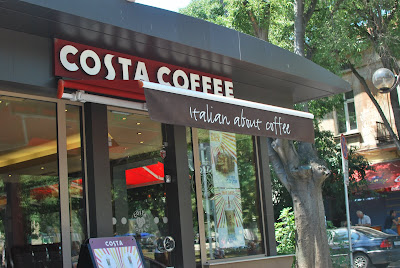
Stopping by Burgas on the way to Ahtopol. Burgas is a modern city with plenty of communist style buildings. I just happened to be next to the biggest monument in town built in memory of the Soviet Army. The grandiose soldier is the focal point of the big square and surrounding area. Not sure what to make of it in times such as ours. I am sitting across the street in "Costa Coffee" where I pay almost American prices for a mocha. A modern mall is just around the corner.


Thursday, June 23, 2011

Nessebar - A bit of hi(story) and some pictures


5.45 a.m. walked on the beach and then headed along the water to Nessebar. The streets were quiet and clean. Few people jogging and sightseeing. Nessebar is a UNESCO world heritage cite. Nessebar's history dates back to the Thracians and ancient Greeks who came here in 6th century B.C. There are old ruins of Byzantine churches (a total of 40 churches in the little town), more recent Bulgarian cobble stone streets and wood houses. Small boats gently swayed by the morning breeze. It smells of seaweed and salt. Coffee houses just opening, owners hosing down the sidewalks and getting out plastic chairs and tables.

This is the Nesseber I would like to exist in its own little undiscovered bubble. Last night it was buried under the tiny make shift and house shops that sold junk, Eastern Europeans were addressed in mother tongue and coaxed to visit overprized restaurants, the noise and bustle paired with the amount of “stuff” made it impossible to stay too long. Not so today.

On the way there I met two old women. They live here. They come out in the morning at 7a.m. and stay till 8 when it starts getting hot. They told me a bit about themselves – who they were in previous lives before retirements and the ill health they have to endure now. Both poorly dressed and sad looking. Their town belongs to others…

Last night met shopkeepers who come here in the summer to work and then go to the mountain resorts for the winter to work there. Hard to make a living, global economy crisis is acutely felt. I discovered a shop with beautiful art, bought me a little souvenir, the owner is an artist too, said most everything else is from China…

Realities come and go, overlap and live side by side, stories of old and new stories..


Wednesday, June 22, 2011

overkill - a written informed consent

http://cliniversity.com/wp/training-informed-consent-overview-and-process/
Sooo, as we sat and chatted casually over shopska salad (tomatoes, cucumbers, feta and onion - my favorite) with two photographers and their partners the issue of the absolute need (my need) to sign consent forms somehow popped in. After a hearty laugh (at me) the comment was: "life in America has deformed you. Or may be we are deformed and don't know it yet). Time to unlearn the learned?

Two research classes and several different projects all connected with interviewing and research have helped me learn well key ethical elements of interviewing - a written outline of the research and a signed consent form. The power of the written word.

According to the Institutional Review Board at Easter Mennonite University:"An Informed Consent Letter describes procedures for informing participants about the purpose of the research and for obtaining their consent to participate. Note: You must also obtain participants’ permission to 1) audio/videotape or photograph them and 2) use any of the recordings or images in presentations or publications."

The IRB provides a template to follow and then off course a place to sign and date. I diligently created a form both in English and Bulgarian.

Why not sign? The population we are talking of is over 80, signing papers makes people much more suspicious regarding your motives and the profit you will make out of them. A grandma once signed some papers for an ID to find out that they had made her sign her land away to someone...

What is the alternative?

Be creative and flexible -
Ask for consent in a form understandable and appropriate to the population you are interviewing. If recording the interviews is OK make sure you explain the process and what you want from them and record it - their verbal acceptance is as good as a written one.

Abuse of trust can happen with or without the paperwork - the integrity of the interviewer is not tied to the paperwork, but is rather an internal commitment to respect the subjects and give back to them what you promise. It used to be enough in their time.

Alex and a grandma going home from work in the field

Sunday, June 19, 2011

In loving memory of grandma Sofia


Close to Dobursko - a village of around 600 people - ethnically pure community in the Pirin mountains. We went to continue the work we started last summer - interviewing women in the village. As usual they were sitting outside on the benches chatting - same croud of last year with two missing. My friend Alex went to investigate. Grandma Sofia had died in November and grandma Katya was now blind and sitting in front of her house. My heart sank - this one woman Sofia had pored out her soul and given us her precious story last year, I needed to see her. It was more than conducting an interview, I had made a connection of trust. Now all we had left of her was the short recording of a conversation and a few pictures. Grandma Katya could not remember who we were, repeated the same songs she sang last year and looked much aged in the little time we had not seen her.

I talked to the women and made some important conclusions regarding the interviewing process, but of that later. Here I want to share the story I recorded and translated last year.

Righteousness keeps me

Grandma Sofia – 1922-2010


photo:Alexander Bagdatov

I am 88 years old. I had a grandson. He was such a nice child – 23 years old. Was an example to all. He would go somewhere with friends, someone would start quarreling – he would try to settle them down and make peace. He did not drink or smoke. Car accident – he died. His mother had prepared clothes for him and the bride – he was getting married….

His mother lived 17 years after him and then she died too, it has been three years now. Everyone thinks their child is the best, but she was a very nice child. Was married in Eleshnitsa. And I am alive and they are dead. First the grandson, then the daughter. I keep having dreams, I dream of them. Wake up at night and cannot sleep. And since she was lost the son-in-low gave me her clothes and would say, “Here, wear this”. I know how I wear them. I am not the person to have tears, but my heart cries always.

What keeps you?

Righteousness keeps me. I don’t want anyone to fight, to be in bad relationships, I try to make better. Now we are here with my son. When they gave the land back he got here a house. He used to be a teacher in Sofia, now he lives with me so I am not alone. He works a lot, very hardworking person he is. This is what holds me together. I can’t do much, but make him food daily. My daughter-in-law is in Kostin Brod, has a mother bedridden now for 15 years. We talk every night with her. We love each other. She always asks my son: “How is your mother?” He goes to see her there once in a long while. We have a horse and a stable far from the home and someone needs to tend it, so he cannot go for long. I help with nothing anymore. Life is so hard. Barely, barely, barely I try and suffer. I come slowly and sit outside. Watch the women go by. I have not seen much good, but life has been given to me and why.

“Alive they held hands, dead they let go” – a song


Saturday, June 18, 2011

travel at dawn

Tuesday this week I left USA to spend the next two months in Bulgaria for my practicum – research and interviews with Bulgarian grandmothers. I left my kids and husband back in Virginia. As the last days tick-tocked to a close I kept thinking that it was a crazy idea to go chasing after old stories and leave my girl home crying. It was a difficult good bye.

I decided to be mindful of what comes my way, to notice. First mindfulness exercise met me at the airport. Without the kids around my mind was unusually free to roam and observe the surroundings.

The security lines were tiresome and long. I tried to pick out faces in the sea of people as the colors and themes kept changing within seconds.

I noticed parents everywhere -

African, Indian, White, dressed in traditional and modern clothes, keeping a vigilant eye on small and older children - some excited, some asleep in their arms, some crying. Mothers juggling like six armed Indian goddesses sleeping babies, diaper bags, plastic toys and monster strollers that had to be collapsed and fitted into the ex-ray controls.

Happy people coming back from vacations with straw hats, sandals and tan bringing into the sterile environment the smell of salt water. Others going home first time in years, the bulging ten suitcases per family and all the presents I envision for the relatives five times removed. I should know that - this time I travel light – only one extra suitcase for family...

A rabbi with a pointy hat and long wise beard.., a businessman with polished black shoes and conventional suit, his dignified manners somewhat ruined by the sight of his socks and the shoes in the gray tray. A loud group of American students ushered by the leaders, thank God to some other plane and destination.

The sting of envy when passing by the chairs/beds of business class in the airplane. They are already seated and talking on their cellphones or checking their Macs. The others are like sardines, somewhere in the back hidden by the discrete curtains.

I sit by the window. I could enjoy the view and keep the bathroom breaks to a minimum.

Midnight EST. Most are asleep or watching movies on their little screens. I open the shutter of the window. It is still very dark with the sky the hint of gray. A small spot of red light under the plane - plane signal? Oddly enough it is growing.

The next one hour I witness a spectacular dawn as we fly East.

The red grows and cuts a wedge between the blue beyond of the horizon and the solid landscape of clouds - a hot blade cutting through light and dark. The colors of it change to orange and yellow and the blue of the sky becomes more luminous. A river of Russian gold begins spilling across the horizon growing in magnitude. Even though I am prepared for the explosion of light still it is unbearable to look at the blinding sun.The massive dark clouds have become feathery veils revealing the ocean and approaching land. No objects have obscured the the divine drama.

It was this same week that I thought of a verse from Isaiah 58 which happened to pop in my head as the sun rose:

“Then your light will break forth like the dawn, and your healing will quickly appear.”

Well, when is that then, after what?! When will there be healing, when will healing be as dramatic as the beginning of a day? What is healing for me and what is healing for my people, what are the signs? Hear a prophetic voice, sounds as fresh today as it did thousands of years ago:

1 “Shout it aloud, do not hold back.

Raise your voice like a trumpet.
Declare to my people their rebellion
and to the house of Jacob their sins.
2 For day after day they seek me out;
they seem eager to know my ways,
as if they were a nation that does what is right
and has not forsaken the commands of its God.
They ask me for just decisions
and seem eager for God to come near them.
3 ‘Why have we fasted,’ they say,
‘and you have not seen it?
Why have we humbled ourselves,
and you have not noticed?’

“Yet on the day of your fasting, you do as you please
and exploit all your workers.
4 Your fasting ends in quarreling and strife,
and in striking each other with wicked fists.
You cannot fast as you do today
and expect your voice to be heard on high.
5 Is this the kind of fast I have chosen,
only a day for a man to humble himself?
Is it only for bowing one’s head like a reed
and for lying on sackcloth and ashes?
Is that what you call a fast,
a day acceptable to the LORD?

6 “Is not this the kind of fasting I have chosen:
to loose the chains of injustice
and untie the cords of the yoke,
to set the oppressed free
and break every yoke?
7 Is it not to share your food with the hungry
and to provide the poor wanderer with shelter—
when you see the naked, to clothe him,
and not to turn away from your own flesh and blood?
8 Then your light will break forth like the dawn,
and your healing will quickly appear;
then your righteousness
[a] will go before you,
and the glory of the LORD will be your rear guard.
9 Then you will call, and the LORD will answer;
you will cry for help, and he will say: Here am I.

“If you do away with the yoke of oppression,
with the pointing finger and malicious talk,
10 and if you spend yourselves in behalf of the hungry
and satisfy the needs of the oppressed,
then your light will rise in the darkness,
and your night will become like the noonday.
11 The LORD will guide you always;
he will satisfy your needs in a sun-scorched land
and will strengthen your frame.
You will be like a well-watered garden,
like a spring whose waters never fail.
12 Your people will rebuild the ancient ruins
and will raise up the age-old foundations;
you will be called Repairer of Broken Walls,

Restorer of Streets with Dwellings.