Thursday, June 30, 2011

"I had almost given up"


Saw an old man playing a flute today near the National palace of Culture (NDK) in Sofia. I was hurrying by, but there was something so desperate about the music that I retreated my steps and gave him 5 leva, not much... He looked up at me surprised and said: "I had almost given up, There is God." I decided that whatever I was doing could wait and stood there talking to him.

His voice sounded like the voice of a person who has not talked to anyone for a long time.

He called me his daughter, told me he had a daughter and a son, but they had abandoned him. He lives close by, but money isn't enough, so he comes to sit here hoping for a few stotinki thrown in the basket, which contained nothing but a small bottle of lemonade.

He needed the company, I wish I had stayed, I wish I had asked his name. He told me tonight he can get himself dinner. He played beautifully old revolutionary songs and marches. Told me: "We are disappearing as a nation and people, we need to take care of each other." Yes, we do. There was shame and painful vulnerability in the way he talked. This is all wrong, but what is to be done? I left him there alone in a city of 2 million that could care less. I hope tomorrow someone else stops for a few minutes to see the old man playing outside the palace doors.

National Palace of Culture (NDK)

Tuesday, June 28, 2011

From the minor to the major keys of story


When I was five I started playing the piano. I gave up on it in early teen years. My major achievement was playing the Moon Sonata. I still remember the slow progress I made in learning to play it and the sheer delight in hearing myself play the sounds of a beloved piece of music. My mom loved to lay on the living room couch and listen to me practice. I got to a point where it became automatic, I didn't have to search for the keys, it flowed through the fingers - it had become a part of me.

When I think of melody I compare it with story - story told in minor or major keys, in its complexity reflecting a certain reality, mood, frame. The way I tell a story like a groove that gets deeper and deeper ingrained and finally becomes me. I am my story and my story makes me.

I have been thinking of this interaction for many years now. I worked for a year with people in transitional housing in Chicago. It was rewarding work with men and women trying to change old patterns and take a chance at making something new. Several of them were from the African-American community. I noticed the different spirit and lightness in which they held themselves in tough situations. One of them in particular struck me with his story. He had lost his father to a violent death, gone to the funerals of relatives killed in intercity violence and himself had been in jail for selling drugs. He wanted to change his life, to be a different man and father. What I noticed was the open manner and sincerity in him. The way he would answer to a question: "How is your day?" "Thank God I have all I need. Thank God, I am alive and it is a good day. And how are you, are you well, are your kids well?" The ability to see outside misery and sadness and to be thankful, to be caring for others. I am amazed at the resilience and bubbling life I have witnessed in the close friends and acquaintances of his community. They have weaved the sweet melody of sadness and joy in a powerful distinct voice.


We too have amazing music. The music of the ages that we have inherited has the quality of haunting sound unlike any other - it is otherworldly. Next to it today we play the chalga that is a mix of Oriental beat, trashy vulgar language and almost naked women.

But this is just a surface observation. What I am more concerned about is the overall melody of our stories. My story - the negativity I have absorbed and keep spitting out in the way I see, internalize and express reality. There is so much negativity - in myself, in my friends, in the newspapers, in the public spaces, in the interactions, in the government. I pick up random conversations from last weeks - the young people leaving, the education sinking down, the corruption in government, the backstabbing in the churches, the health reform bringing nothing, the old left without enough money to live on, the kids with disability still treated with disdain, the ethnic tensions rising... The list is going on and on and on. What are we powerless about and what could we change? If slavery and discrimination in America brought out such beauty are we up to the challenge to bring beauty out of ashes in our home?

I think there is a holy space outside and inside us that needs to be searched for and held to with all our might. If a person reaches out for the quiet of God small miracles happen.

We traveled back home from the Black Sea yesterday. I had come to the conclusion that we are a lazy nation waiting for the mercy of others to solve our problems. Not so in Trakia - a geographical region in East Bulgaria. Ten years ago we went the same rout - there were few scattered fields of crop and land going through its Sabbath - not touched by human hand or cared for. This time the view gladded us. It was a sunny day and the passing visions were spectacular.

There were miles and miles of golden wheat ready for the holy harvest. It made me think of Yovkov and Elin Pelin and their emblematic stories of harvest, summer and singing women. In Karnobat region stretched way back to the distant hills orderly green vines that would produce the sweet wine of autumn. The yellow faces of the sunflowers followed their mother sun making the land smile. Small orchards of peaches, nectarines, apples and pears greeted us. Along the roads a green wall of old walnut trees stretched for many miles.

It is the season of the linden trees, with open windows their subtle tea perfume could be felt in the air with the smell of warm earth. Their small flowers inhabited by fairies.

This land - it is not forgotten. Someone had lovingly tilted it and watered it. It is a beloved land of hardworking people who wake up at dawn and stay late nights to give it a drink. Their small villages were tidy and clean. The little gardens full with summer flowers and vegetables. The houses many times left unpainted for the lack of money, red brick showing the ware and tare of time, stamped with poverty.

It sang the sweet melody of labor, land, community and hope.


Sunday, June 26, 2011

Emil Velinov director of the directorate of religious affairs in the Council of ministers.

Met with Mr. Velinov today to discuss the issues of Christian Muslim relations in Bulgaria and the minority rights. Talked about the recent acts of violence against the Muslim community in Sofia, the drivers of conflict and their interests.
see here for more details regarding the incident:

Attachment – a useful frame for change and healing in the church community


(a summary of my presentation in Ahtopol. Audience: young Christian leaders and some of the older pastors of churches - 40 people present)

1. Framing issues

A joke from this week’s Bulgarian newspaper:

A thick neck (a guy connected with Bulgarian mafia with low IQ) immigrates to Australia. He comes back home and is asked: “What impressed you most about the country.” He says: “They have huge grasshoppers”.

If it jumps like a grasshopper it must be a grasshopper. The power of framing an issue is to help you see the details and to exclude other facts that don’t fit in it. Same with photography – there are images that enter the frame and others left out.

2. Attachment

(note: I used attachment theory in training pastors to describe the influence of others on their present understanding of God and ministry several years ago. The theory part of this post refers to a research on attachment, leadership and polarization that Rebecca Stone and I did this year. I am not going to use any of the references at present, will try to add them at a later date when I have more time.)

Attachment theory can be used as a frame in understanding the challenges and needs in our churches. Previous evening Nikolay Ivanov, pastor of church "Crossroads" in Sofia spoke about the need to know yourself, to be able to see self in the mirror. I will develop this further – how do I know myself through the other, how is the other a twisted mirror or one that reflects something about me that could help me change and grow.

a. Attachment – definition and brief history of the theory: "Emotional regulatory mechanism” - Bowlby

b. The two questions attachment theory asks: “Am I lovable and worthy?” “Are you worthy of trust and the world a safe place?” Depending on early formation and the way these key questions are being answered different attachment styles develop – secure and insecure, the insecure attachment are ambivalent anxious, avoidant and dismissive.

c. Shaping moments and the role of others – times of crisis in which the presence or absence of others could have huge impact on the shaping of the brain. Once attachment is damaged a person cannot talk their way out of the new patterns, only reattachment to another could help bring healing.

Differently put: if you picture a frozen chicken breast this is what happens to the brain in trauma. It freezes and the connection between the left and right side of the brain is damaged. The creativity is dampened and verbal expression of the trauma is difficult. A process of healing with the help of others could help unfreeze and integrate the past.


I the Lord, heal you - Exodus 15:26 (this sign is behind the pulpit in Ahtopol's church. Healing many times happens through the loving care of others.

3. Shared the story of a good friend. Lessons learned there in her journey toward healing:

a. Attachment to another person

b. Attachment to God

c. Attachment to a religious community

d. Reattachment to the person who caused the primary hurt

Questions I asked the group to think about:

1. The power of your past – what was your family like, what kind of friends did you have, what are your friends now, how do you tell your story and what are its key themes?

2. Is marriage everything? Should you expect the marriage partner to provide for all emotional needs? Where else do you get support? Where is the supportive environment for the young people in Bulgaria?

3. You as a leader, a pastor, a servant – how do you act toward others, what do you think is your attachment style? What kind of mirror are you for others?

Questions for the church in Bulgaria:

1. What kind of people are in the churches, what attachment styles do you notice and the way they relate to each other?

2. How does their past and identity influence the present reality of relationships?

3. How would a traumatic experience impact a person in their relationships in the church and in the way they raise their children?

4. If it has taken us 50 years to get here, how many years do you think will take us to get out?

5. Think of whole groups being impacted by the past – highlight historical events that have impacted the country and the church – what will it take to start shifting the dynamic, what kind of leaders do we need?


Friday, June 24, 2011

Communist Heritage - Burgas


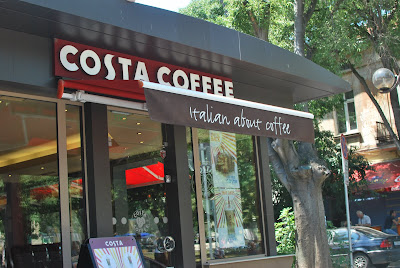
Stopping by Burgas on the way to Ahtopol. Burgas is a modern city with plenty of communist style buildings. I just happened to be next to the biggest monument in town built in memory of the Soviet Army. The grandiose soldier is the focal point of the big square and surrounding area. Not sure what to make of it in times such as ours. I am sitting across the street in "Costa Coffee" where I pay almost American prices for a mocha. A modern mall is just around the corner.


Thursday, June 23, 2011

Nessebar - A bit of hi(story) and some pictures


5.45 a.m. walked on the beach and then headed along the water to Nessebar. The streets were quiet and clean. Few people jogging and sightseeing. Nessebar is a UNESCO world heritage cite. Nessebar's history dates back to the Thracians and ancient Greeks who came here in 6th century B.C. There are old ruins of Byzantine churches (a total of 40 churches in the little town), more recent Bulgarian cobble stone streets and wood houses. Small boats gently swayed by the morning breeze. It smells of seaweed and salt. Coffee houses just opening, owners hosing down the sidewalks and getting out plastic chairs and tables.

This is the Nesseber I would like to exist in its own little undiscovered bubble. Last night it was buried under the tiny make shift and house shops that sold junk, Eastern Europeans were addressed in mother tongue and coaxed to visit overprized restaurants, the noise and bustle paired with the amount of “stuff” made it impossible to stay too long. Not so today.

On the way there I met two old women. They live here. They come out in the morning at 7a.m. and stay till 8 when it starts getting hot. They told me a bit about themselves – who they were in previous lives before retirements and the ill health they have to endure now. Both poorly dressed and sad looking. Their town belongs to others…

Last night met shopkeepers who come here in the summer to work and then go to the mountain resorts for the winter to work there. Hard to make a living, global economy crisis is acutely felt. I discovered a shop with beautiful art, bought me a little souvenir, the owner is an artist too, said most everything else is from China…

Realities come and go, overlap and live side by side, stories of old and new stories..


Wednesday, June 22, 2011

overkill - a written informed consent

http://cliniversity.com/wp/training-informed-consent-overview-and-process/
Sooo, as we sat and chatted casually over shopska salad (tomatoes, cucumbers, feta and onion - my favorite) with two photographers and their partners the issue of the absolute need (my need) to sign consent forms somehow popped in. After a hearty laugh (at me) the comment was: "life in America has deformed you. Or may be we are deformed and don't know it yet). Time to unlearn the learned?

Two research classes and several different projects all connected with interviewing and research have helped me learn well key ethical elements of interviewing - a written outline of the research and a signed consent form. The power of the written word.

According to the Institutional Review Board at Easter Mennonite University:"An Informed Consent Letter describes procedures for informing participants about the purpose of the research and for obtaining their consent to participate. Note: You must also obtain participants’ permission to 1) audio/videotape or photograph them and 2) use any of the recordings or images in presentations or publications."

The IRB provides a template to follow and then off course a place to sign and date. I diligently created a form both in English and Bulgarian.

Why not sign? The population we are talking of is over 80, signing papers makes people much more suspicious regarding your motives and the profit you will make out of them. A grandma once signed some papers for an ID to find out that they had made her sign her land away to someone...

What is the alternative?

Be creative and flexible -
Ask for consent in a form understandable and appropriate to the population you are interviewing. If recording the interviews is OK make sure you explain the process and what you want from them and record it - their verbal acceptance is as good as a written one.

Abuse of trust can happen with or without the paperwork - the integrity of the interviewer is not tied to the paperwork, but is rather an internal commitment to respect the subjects and give back to them what you promise. It used to be enough in their time.

Alex and a grandma going home from work in the field